Free, always

Relapse, honestly

Relapse happened. What must you do now?

One slip is not the same thing as starting over from zero, whatever it feels like right now. This page exists for this exact moment, not to tell you how it happened or what it means about you, but to walk through what actually helps in the next hour, and why the thing your brain wants you to feel right now is the part to watch out for most.

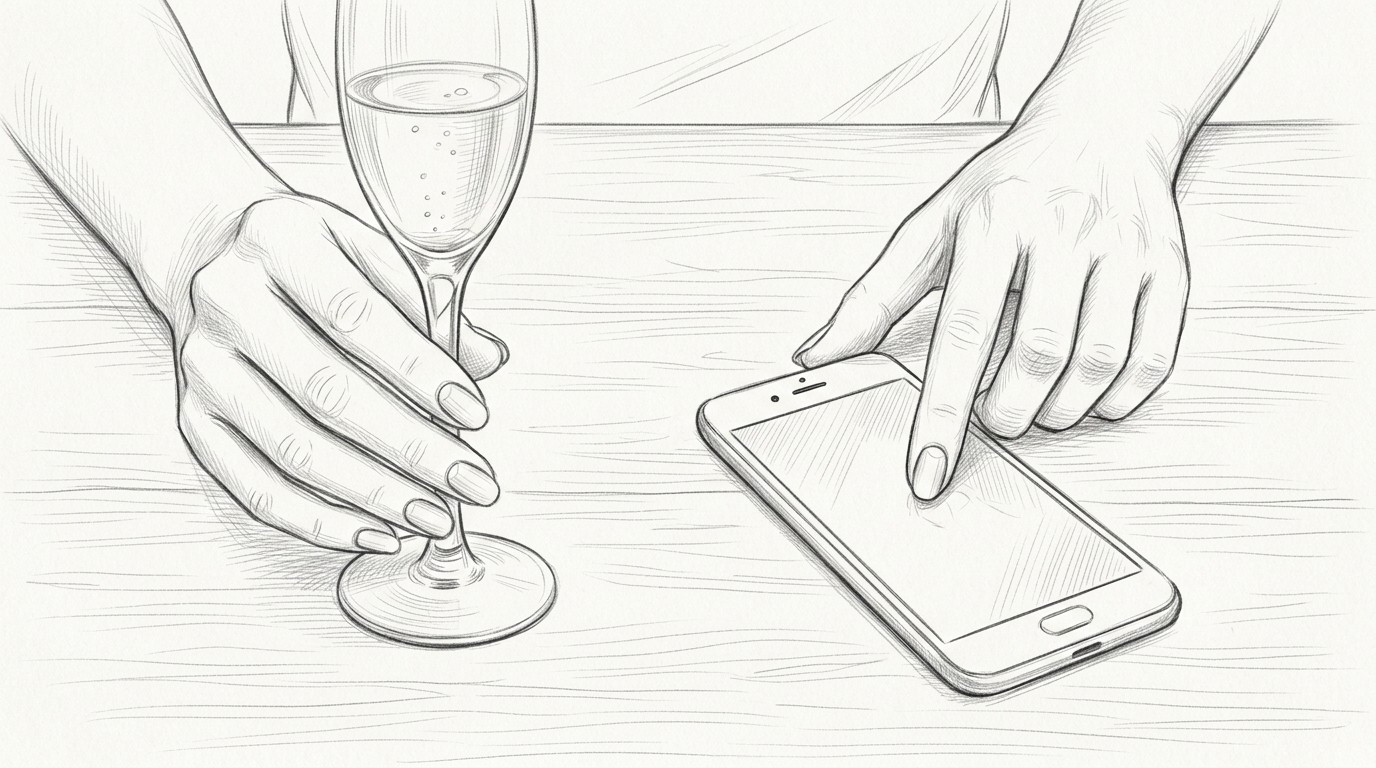
Pencil sketch of two hands, one setting down a champagne glass, the other reaching for a phone

One hand at the glass, one hand reaching for the phone. That's the whole decision, right there.

1

The one thing that matters more than what happened

In addiction research there's an important difference between a lapse, a single slip, and a relapse, a full return to old patterns. A lapse makes a relapse more likely, but it does not make it certain, the two are not the same thing.

What actually decides which one you're in has a name: the abstinence violation effect. It's the wave of shame and self-judgment that shows up right after a slip, "I've already ruined it, so what's the point now." That reaction, not the slip itself, is what research identifies as the real mechanism that turns one drink into a full relapse. Which means the most useful thing you can do right now is notice that voice and not believe everything it's telling you.

Source: Relapse Prevention, Marlatt's Cognitive-Behavioral Model, PMC ↗ · Abstinence Violation Effect, ScienceDirect ↗

2

Check these four things, right now

HALT is a simple, widely used checklist in addiction recovery: Hungry, Angry, Lonely, Tired. These four states are the most common reasons the urge to drink gets louder, and each one has a direct, practical fix.

  • Hungry. Eat something and drink water, low blood sugar makes everything feel more urgent than it is.
  • Angry. Name it before you act on it, a walk, a few slow breaths, or writing it down all work.
  • Lonely. Reach out to one person, even just a text, isolation is what lets the next drink feel like the only option.
  • Tired. Rest if you can, even a short one, decisions made on no sleep are rarely the ones you'd choose otherwise.

Source: Addiction Policy Forum, HALT ↗ · American Addiction Centers, HALT ↗

3

If your body needs help, that comes first

If you've been drinking heavily or for a long time and you're now feeling physically unwell, shaking, sweating, a racing heart, or anything that feels like withdrawal, get medical care before anything else on this page. Withdrawal from heavy or long-term drinking can be genuinely dangerous, this isn't a willpower issue, it's a medical one.

Source: NIAAA, Evidence-Based Treatment ↗

4

Don't do this part alone

The single most protective thing you can do after a slip is the one thing shame tries hardest to stop you from doing: telling someone. Not a confession, not an apology, just contact. Reaching out isn't giving up, research on recovery consistently shows that people who stay connected to support after a lapse are far less likely to end up in a full relapse than people who go quiet and try to handle it alone.

SANCA and SADAG both run real, confidential helplines for exactly this, day or night.

See the numbers on Helplines →

Source: NIAAA, Support Recovery ↗

5

Your counter isn't a scoreboard

If you've been using the day counter, you might be looking at it right now like it's evidence against you. It isn't. It was never a test you could fail, it's just a number that tracks time, and it can start again the moment you're ready, today, tomorrow, whenever. Resetting it isn't losing progress, the version of you that got this far already exists either way.