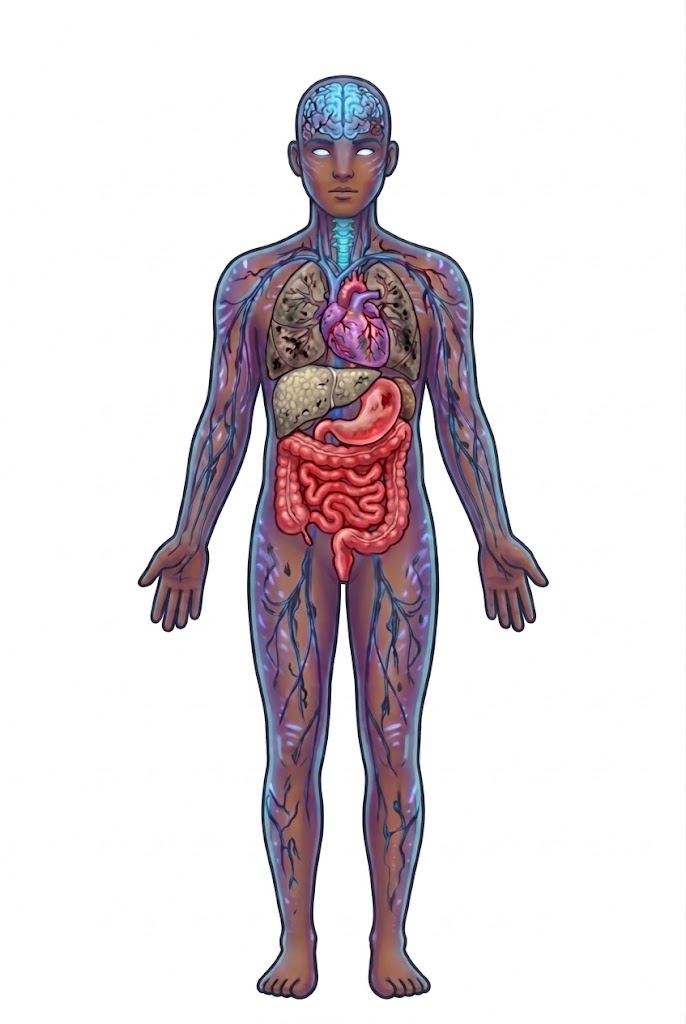
Brain
Alcohol disrupts the balance between GABA (your brain's calming chemical) and glutamate (its stimulating one), which is exactly why it feels relaxing in the moment, even while it's actively interfering with how your brain works. Heavy drinking over time is linked to memory problems, mood changes, and measurable shrinkage in brain tissue.
Here's the part almost nobody tells you: alcohol doesn't just relax you, it can quietly rewire your anxiety. A drink floods your brain with dopamine, which is the good feeling. But as that fades, your brain swings hard the other way, often leaving you more anxious than you were before you picked up the glass. This has an actual name, "hangxiety", and it's not a fringe experience. If you already live with anxiety, using alcohol to cope with it is one of the most common ways this cycle starts, and one of the hardest to break: 20 to 40% of people being treated for an anxiety disorder also have alcohol use disorder. Two conditions, feeding each other.
Source: NIAAA, Alcohol's Effects on the Body ↗ · NIAAA, Alcohol & Co-occurring Mental Health Conditions ↗ · Cleveland Clinic, Hangxiety ↗