Chapter One: Why This Exists
No one pours the first drink hoping it will end up owning them.
Nobody sits at that first party, that first braai, that first glass passed to them by someone they wanted to impress, and thinks: this is the beginning of twelve years I'll spend trying to get out.
No. It starts as fun. It starts as the thing that makes the music better and the room easier to be in. It starts as courage in a glass, the thing that gets you talking to the person you liked, the thing that makes you feel like you finally fit into a world that never quite made space for you before.
Maybe it's peer pressure dressed up as belonging. Maybe it just looks cool, the way it does on every screen, in every song, in every hand at every table that mattered. Nobody starts here to become someone who can't stop. Everybody starts here because, for a while, it works.
That was me too.
For twelve years, it worked, or seemed to. From the outside, nothing looked wrong. I still showed up. I still laughed loudest in the room. What began as something fun, something social, something that made me feel like I belonged, slowly rearranged itself into something else entirely, quietly enough that even I didn't notice at first. Somewhere in those twelve years, the glass stopped being an invitation and became a requirement. I stopped drinking to feel good and started drinking so I wouldn't feel bad.
Sometimes I'd buy the round because I wanted to be celebrated, wanted to be noticed, wanted to feel important. When people cheered, it made me feel good about myself, for a moment. Then I'd wake up anxious, with no money, and the most important things in my life still undone.
My solution always looked the same: borrow from a loan shark. Even knowing I'd have to pay back fifty percent more than I borrowed, it didn't matter, I'd pay it anyway. I stayed in that exact routine for the longest time, and I missed things I can't get back, because I was stuck in that loop.
There's a particular kind of dread in that stuckness. The buzz is over, and you're left with what it cost you, wondering why you did it again. You look around and other people seem to be moving forward, still drinking, but somehow progressing anyway, while you're stuck in the same place.
And when the alcohol wore off, the conversation was always the same: how epic last night was, how crazy, how fun, let's do it again. It was routine. And it kept getting worse.
I was going around and around in that maze, never finding my way out. And if I'm honest, most of the friendships from that time were meaningless. Our visions for our lives weren't even aligned, but it was what I had.
The truth is, those friendships were built on trauma bonding, not real connection. We'd sit and drink and trade our hardest stories, how tough life was, what we'd been through, and somewhere in there we'd call it friendship. But take the alcohol away, and there was nothing left holding it together.
I remember sitting down one day and crying, because I realized I had missed myself. I'd ask myself: why do I think like this? I know I'm precious. I know I deserve the life I actually envisioned for myself. So why was alcohol always sitting in the middle of every conversation? Why couldn't a conversation just be a conversation, without someone saying "buy me a drink," "I'll buy you one back," "this round's on me"?
I hated that about the environment I was in. It was always about the bottle, and I couldn't see a version of my life where that ever changed.
By the end, I wanted out so badly it frightened me, because I didn't know anymore if I knew how.
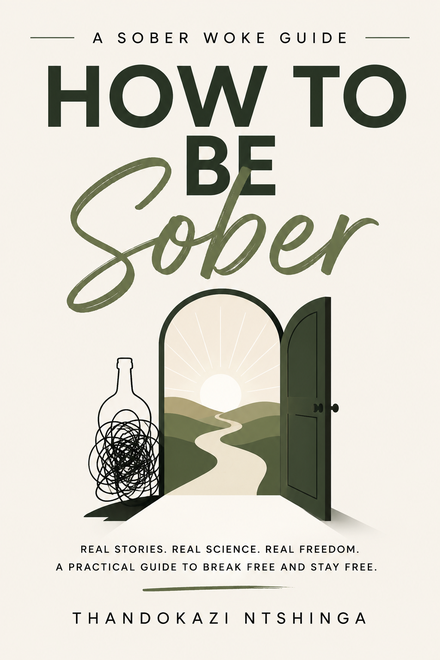
That's the part no one warns you about when you're seventeen and it's just a laugh at a party: how quietly the door closes behind you. You don't hear it shut. You only notice, years later, that you've been standing in a room you don't remember choosing, wanting so badly to leave.
Mine came on the 28th of December, 2024.
There was no dramatic rock bottom you could point to on a calendar, no single night that made the news. There was just a decision, made quietly, on an ordinary day, after years of wanting out: I am never going to drink again. And I meant it in a way I had never meant anything before.
Here's the part I need you to hear, because it's the part most people skip when they tell this story: by the end, I wasn't even happy when I was drinking. That's the lie alcohol tells you: that it's still giving you what it gave you at seventeen. It isn't. Somewhere along the way it had already taken that back and left the habit in its place.
I had to choose between compromising my mental health for a few more hours of feeling okay, or actually being okay. Once I saw it that clearly, there wasn't really a choice left to make.
Everything changed after that.
Not overnight, and not without work. I won't pretend this book is going to make it painless, because it isn't painless, and I'd be lying to you in the first chapter if I said otherwise. But it changed. My mind got quieter in the good way. My mornings stopped being something to survive. I started being present for my own life instead of watching it happen through a fog I'd once mistaken for fun.
I'm writing this because I know what it's like to be exactly where you might be right now, somewhere between the party that used to be fun and the mornings that no longer are. Turning this page hungover, or scared, or just tired of waking up foggy, wondering if this is who you are now.
It isn't. It wasn't for me, and it doesn't have to be for you.
This book isn't going to talk down to you, and it isn't going to sugarcoat what's ahead. It's going to be honest about what your body is about to go through, honest about the days that will be hard, and honest about the fact that a lot of people who try this don't get it right on the first attempt. That doesn't mean they failed. It means they're human.
What I can promise you is this: everything in these pages is either backed by real research, the kind done by doctors and scientists who study this for a living, or it's something I lived through myself. Nothing here is made up to sound nice. You deserve better than nice. You deserve the truth and a plan.
So if you're reading this, you're probably where I was. Somewhere between "I can't keep doing this" and "I don't know how to stop." That gap is exactly where this book lives.
I know how it feels when someone tells you, "if you really wanted to stop, you'd just stop." I know how it feels to tell someone, "I didn't drink this weekend," and watch it mean nothing to them. I know how it feels to not be seen, to not be valued. And I definitely know how it feels to miss yourself.
Let's close it, one page at a time.